The Industrial Safety Paradox: Everyone Wants It, Few Manage It Well
Every production manager knows the scene: the inspection arrives, it turns out the technical file is incomplete, the guards are not compliant with EN ISO 14120, and the consultant who carried out the risk assessment two years ago no longer answers the phone.
The problem is not the willingness to be compliant. The problem is how compliance is achieved. In most cases, companies approach machinery compliance as a series of separate purchases: a consultant for the risk analysis, a supplier for the guards, an installer for assembly, a technical office for documentation. Each step works — on paper. But when the pieces have to fit together, problems begin.
Three Real Scenarios (and Three Common Mistakes)
1. The Downtime That Shouldn’t Have Happened
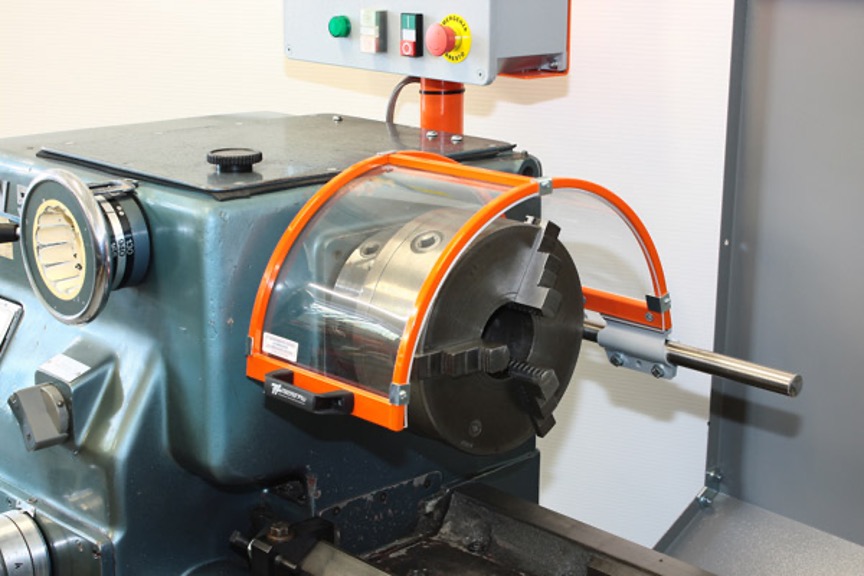
A mechanical company in Northern Italy commissions the compliance upgrade of a line of parallel lathes. The consultant delivers the risk assessment in 3 weeks. The guard supplier takes 6 weeks to manufacture. The installer is only available the following month. Result: 4 months of process for an intervention that, with an integrated approach, would require less than 2. In the meantime, the line operates under temporary exemption — with all the related liability implications.
2. The Document That Is Always Missing
Guards installed, machine operational, audit passed — until an inspector requests the updated technical file according to EN ISO 20607. The guard supplier does not provide it. The consultant says it was not within their scope. The company ends up with a “compliant” system but without the documentation that proves it.
3. The Guard That Doesn’t Fit
Perimeter guards ordered from a catalog, without a technical site inspection. During installation, it becomes clear that they interfere with the machine loading cycle. Redesign, reorder, reinstall. Costs doubled, timelines tripled, and a production manager who swears never to hear about “compliance upgrades” again.
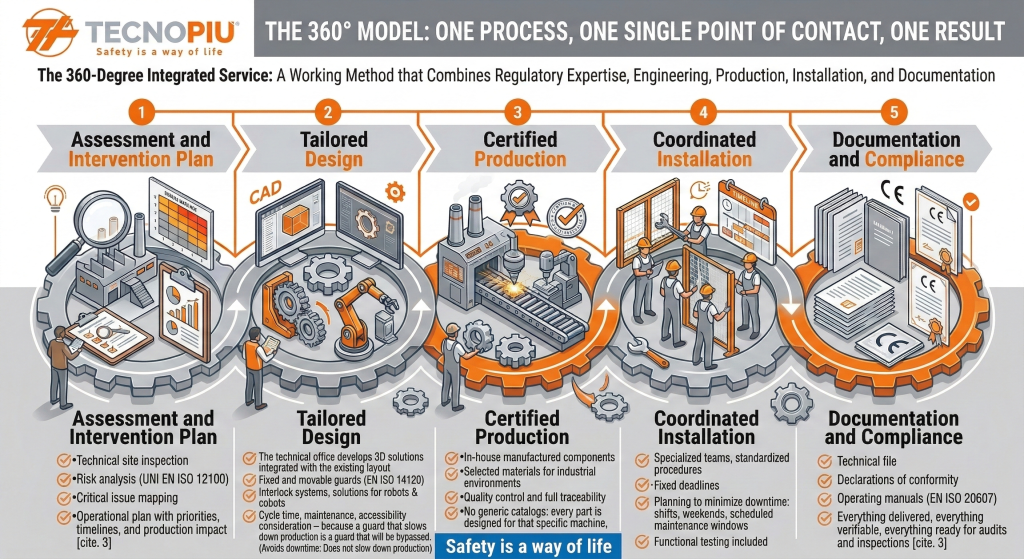
The 360° Model: One Process, One Partner, One Result
The integrated 360-degree service was created precisely to eliminate these scenarios. It is not a commercial package: it is a working method that brings together regulatory expertise, engineering, manufacturing, installation, and documentation under a single direction.
In practice, it works like this:
Phase 1 — Assessment and action plan. Technical site inspection, risk analysis according to UNI EN ISO 12100, mapping of critical issues. Not a generic document: an operational plan with priorities, timelines, and production impact.
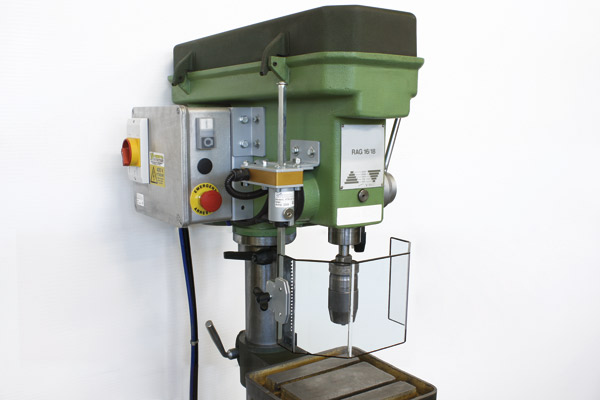
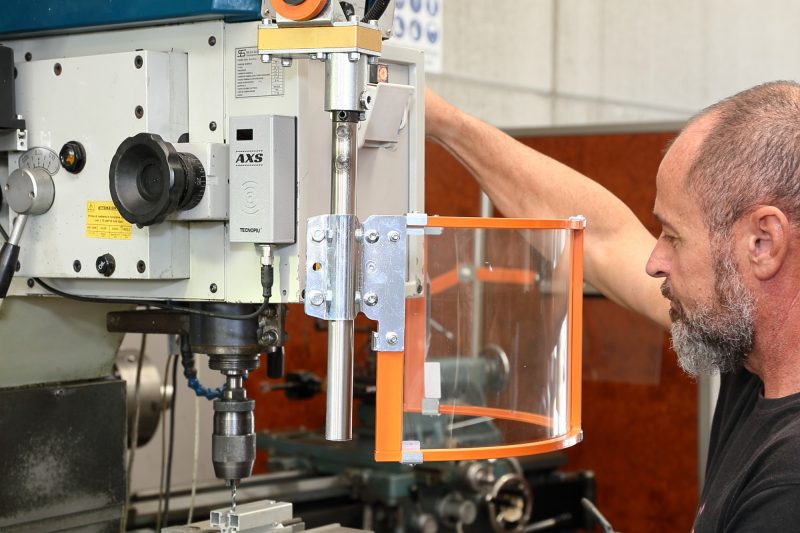
Phase 2 — Tailor-made design. The technical office develops 3D solutions integrated with the existing layout. Fixed and movable guards (EN ISO 14120), interlocking systems, solutions for robots and cobots. Every project considers accessibility, maintenance, and cycle times — because a guard that slows production is a guard that will be bypassed.
Phase 3 — Certified production. Components manufactured in-house, with materials selected for industrial environments, quality control, and full traceability. No generic catalogs: every piece is designed for that specific machine, in that specific context.
Phase 4 — Coordinated installation. Specialized teams, standardized procedures, defined timelines. Installation is planned to minimize downtime: shifts, weekends, scheduled maintenance windows. Functional testing included.
Phase 5 — Documentation and compliance. Technical file, declarations of conformity, operating manuals according to EN ISO 20607. Everything delivered, everything verifiable, everything ready for audits and inspections.
Why It Works Better (With Numbers)
- Downtime reduced by up to 60%: one coordinated project eliminates waiting times between suppliers.
- Overall costs reduced by 35%: no rework, no duplicate design phases, no surprises.
- No responsibility ping-pong: a single partner is accountable for everything, from assessment to certification.
- Guaranteed compliance: technical solutions and documentation are developed together, not afterward.
Who the 360° Service Is Designed For
- Pre-CE machinery and aging systems that must be brought into compliance without disrupting production.
- New installations with robots, cobots, automated systems, and multi-supplier mixed lines.
- Companies that have already tried the fragmented approach and know its hidden costs.
- Production managers and HSE managers who want a technical partner, not a component seller.
The First Step: The Technical Site Inspection
The process begins with a free technical site inspection: machine survey, preliminary risk assessment, timeline and impact estimate. No commitment, no blind quotation. Just a clear snapshot of the situation and a concrete action plan.
Want to understand how much the fragmented approach is costing you? Request a technical site inspection and discover how the 360° model can turn compliance from a problem into a competitive advantage.
Learn more about the integrated service: Machinery Directive — The Tecno Più Integrated Solution